



Is FUE Right for You?
Is FUE Right for You?

Is FUE Right for You? Full Suitability Guide
One of the most important questions to answer before considering treatment is whether an FUE hair transplant is right for you.
FUE hair transplant suitability depends on several factors, including your stage of hair loss, the strength of your donor area, and your long-term expectations.
While FUE is one of the most advanced and widely used hair restoration techniques, it is not suitable for everyone. Understanding whether you are a good candidate helps ensure the best possible outcome and avoids unrealistic expectations.
This guide explains who is suitable for an FUE hair transplant, what factors are considered, and how to determine if this treatment is the right option for you.
Key Takeaway: FUE Hair Transplant Suitability
- Not everyone is a suitable candidate for FUE
- Donor area strength is a key factor
- Hair loss stability affects long-term results
- A consultation is essential for accurate assessment
What Makes a Good Candidate for an FUE Hair Transplant?
A good candidate for an FUE hair transplant is someone who can achieve a natural and sustainable result.
This is based on having:
- A strong and stable donor area
- A predictable pattern of hair loss
- Realistic expectations about density and coverage
FUE works by redistributing existing hair rather than creating new hair. This means the quality and availability of donor hair are essential.
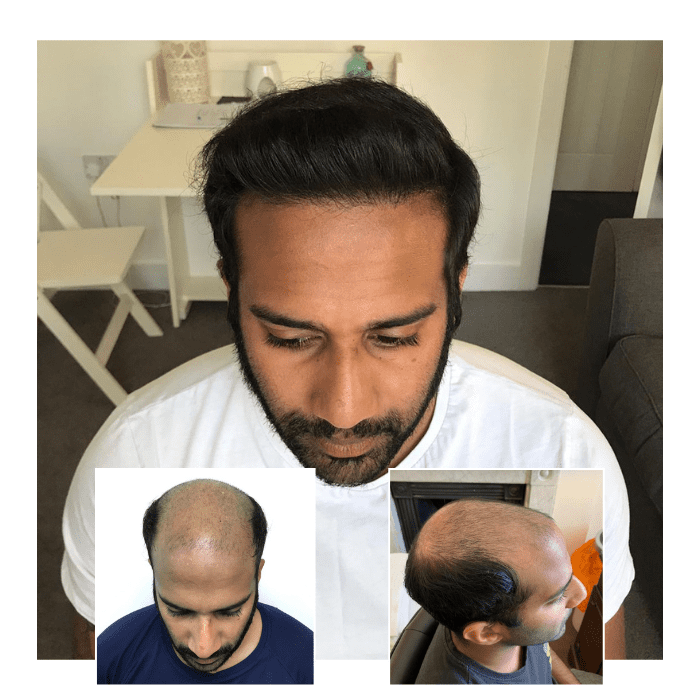
Key Factors That Determine FUE Hair Transplant Suitability
There is no single factor that determines whether FUE is right for you. Instead, suitability is based on a combination of elements.
Donor Area Quality
The donor area is one of the most important factors in FUE hair transplant suitability.
This is the area at the back and sides of the scalp where follicles are taken from.
A strong donor area should have:
- Good hair density
- Healthy follicles
- Sufficient coverage to allow extraction without visible thinning
If the donor area is weak, achieving a natural result becomes more difficult.
FUE is not about whether you can have a transplant, but whether you can achieve a natural and sustainable result. Suitability comes down to donor strength, hair loss stability, and long-term planning.
Darryl King – Capital Hair Restoration – Hair Consultant
Hair Loss Pattern and Stability
Hair loss should be relatively stable before undergoing an FUE hair transplant.
This means:
- The pattern of hair loss is predictable
- Rapid or ongoing loss is managed
- Future progression has been considered
If hair loss is still progressing quickly, a transplant may lead to uneven results over time.
Age and Timing
Age plays a role in determining FUE hair transplant suitability.
Younger patients may still be experiencing changes in their hair loss pattern.
In most cases:
- Patients in their mid-20s and older are better candidates
- Hair loss patterns are more established
- Long-term planning is more accurate
This does not mean younger patients are not suitable, but careful assessment is required.
Hair Characteristics
Hair type also influences suitability.
Factors such as:
- Hair thickness
- Hair colour
- Hair texture
All affect how well density can be achieved and how natural the result will look.
For example, thicker or wavy hair can create better visual density with fewer grafts.

Why Suitability Matters
An FUE hair transplant is a long-term solution.
Ensuring you are a suitable candidate helps:
- Achieve natural-looking results
- Maintain balance as hair loss progresses
- Avoid the need for corrective procedures
This is why careful assessment is essential before moving forward.
Who Is Not Suitable for a FUE Hair Transplant?
While many patients are good candidates, there are situations where FUE hair transplant suitability is limited.
Understanding who is not suitable is just as important as knowing who is.
Weak or Limited Donor Area
A weak donor area is one of the main reasons a patient may not be suitable for an FUE hair transplant.
This can include:
- Low hair density
- Fine or fragile hair
- Previous over-harvesting
If there are not enough healthy follicles available, it may not be possible to achieve a natural result.
In these cases, alternative treatments or a more conservative approach may be recommended.

Advanced Hair Loss with Limited Donor Supply
Patients with more advanced hair loss can still be suitable, but only if the donor area can support the required grafts.
If hair loss is extensive and the donor area is limited:
- Full coverage may not be achievable
- Density may need to be reduced
- Results may be more conservative
This does not necessarily rule out FUE, but it requires careful planning and realistic expectations.
Unstable or Rapid Hair Loss
Hair loss that is still progressing quickly can affect long-term results.
If an FUE hair transplant is performed too early:
- Existing hair may continue to fall out
- Transplanted areas may become uneven
- Additional procedures may be required
In these cases, stabilising hair loss with medication may be recommended before considering surgery.
Unrealistic Expectations
Suitability is not only about physical factors.
Patients who expect:
- Full natural density
- Immediate results
- A permanent solution without ongoing management
May not be suitable without proper guidance.
An FUE hair transplant is designed to create natural-looking improvement, not perfection.

Certain Medical Conditions
Some medical conditions may affect suitability for an FUE hair transplant.
These can include:
- Scalp conditions that affect healing
- Certain autoimmune disorders
- Conditions that impact hair growth
An assessment is always carried out before proceeding with treatment.
A successful outcome starts with an honest assessment. Not every patient is an ideal candidate, and understanding that early ensures expectations are realistic and results are built to last.
Steven Ambrose – Capital Hair Restoration – Hair Consultant
Edge Cases: When Suitability Is Less Clear
Some patients fall into a middle category where FUE hair transplant suitability is not immediately clear.
Younger Patients
Younger patients may still be experiencing changes in their hair loss pattern.
This can make long-term planning more difficult.
In these cases:
- A conservative approach is often recommended
- Hairline design is carefully planned
- Future hair loss is taken into account
Thin Donor Hair
Patients with thinner hair can still be suitable for an FUE hair transplant, but results may differ.
- More grafts may be required to achieve density
- Visual density may be lower compared to thicker hair
A tailored approach is needed to achieve the best outcome.
Previous Hair Transplants
Patients who have had previous procedures may still be suitable for FUE.
However:
- The donor area may already be partially used
- Remaining grafts must be managed carefully
- Expectations may need to be adjusted
A detailed assessment is essential in these cases.
Why Honest Assessment Is Important
Not every patient will be the ideal candidate for an FUE hair transplant.
A responsible clinic will:
- Assess suitability honestly
- Recommend alternatives where appropriate
- Focus on long-term outcomes rather than short-term results
At Capital Hair Restoration, suitability is always prioritised to ensure patients achieve results that look natural and last over time.

Can You Improve Your FUE Hair Transplant Suitability?
In some cases, FUE hair transplant suitability can be improved before treatment.
If you are not an ideal candidate immediately, there are steps that can help optimise your outcome.
Stabilising Hair Loss
If hair loss is still progressing, stabilising it is often the first step.
This can include:
- Medical treatments such as finasteride or minoxidil
- Lifestyle improvements that support hair health
Stabilising hair loss helps:
- Preserve existing hair
- Create a more predictable pattern
- Improve long-term transplant results
Strengthening the Donor Area
While you cannot increase the number of follicles in the donor area, you can improve overall hair quality.
This may involve:
- Optimising nutrition
- Supporting scalp health
- Following medical advice where appropriate
Stronger hair characteristics can improve visual density after an FUE hair transplant.
Taking a Long-Term Approach
FUE hair transplant suitability is not just about the present. It is about planning for the future.
This means:
- Considering how hair loss may progress
- Designing a hairline that will age naturally
- Preserving donor hair for potential future use
A well-planned approach ensures results remain consistent over time.
When Is the Right Time for a FUE Hair Transplant?
Timing is a key part of FUE hair transplant suitability.
Having a transplant too early or too late can affect the final result.
Too Early
If treatment is carried out too early:
- Hair loss may continue behind the transplanted area
- Results may become uneven over time
- Additional procedures may be required
This is why younger patients are often advised to wait until their hair loss pattern becomes more stable.
The Ideal Time
The best time for an FUE hair transplant is when:
- Hair loss has stabilised
- The donor area is strong
- A long-term plan can be created
For many patients, this is typically in their mid-20s or later, although it varies by individual.
Too Late
Even with advanced hair loss, FUE can still be an option.
However:
- Donor hair may be limited
- Full coverage may not be achievable
- Results may be more conservative
This is why early assessment is important, even if treatment is not carried out immediately.
The best results come from matching the right patient to the right plan. A strong donor area, stable hair loss, and a clear long-term strategy are what make FUE a suitable option.
Darryl King – Capital Hair Restoration – Hair Consultant
What Happens During a Consultation?
A consultation is the most important step in determining FUE hair transplant suitability.
During this process:
- Your hair loss pattern is assessed
- The donor area is examined
- Your goals and expectations are discussed
- A personalised treatment plan is created
This allows for an accurate evaluation of what can be achieved.

Why Personalised Planning Matters
No two patients are the same.
FUE hair transplant suitability depends on individual factors, which is why:
- Treatment plans are tailored
- Graft numbers are carefully calculated
- Density and coverage are balanced
At Capital Hair Restoration, every patient receives a personalised approach designed to achieve natural and long-lasting results.
Is FUE the Right Choice for You?
FUE hair transplant suitability comes down to whether a natural, long-term result can be achieved based on your individual characteristics.
If you have:
- A strong donor area
- A stable pattern of hair loss
- Realistic expectations
Then an FUE hair transplant is likely to be a suitable and effective option.
For many patients, FUE provides a reliable way to restore hair and improve confidence.
What If You Are Not Suitable for FUE?
Not being immediately suitable for an FUE hair transplant does not mean you have no options.
In some cases:
- Hair loss can be stabilised before treatment
- A more conservative approach can be taken
- Alternative treatments may be recommended
The goal is always to find the most appropriate solution based on your situation.
Why Choosing the Right Clinic Matters
FUE hair transplant suitability is not just about your hair. It is also about the quality of assessment and planning.
An experienced clinic will:
- Evaluate your suitability honestly
- Avoid over-promising results
- Create a long-term treatment plan
At Capital Hair Restoration, every recommendation is based on achieving the best possible outcome rather than simply performing a procedure.
Final Thoughts
An FUE hair transplant can deliver natural and long-lasting results, but only when the right conditions are in place.
- Not everyone is a suitable candidate
- Donor area and hair loss stability are key
- Realistic expectations are essential
Understanding these factors helps you make an informed decision and ensures you approach treatment with confidence.
Your Next Step
Determining whether an FUE hair transplant is right for you is not simply about your current level of hair loss. It is about understanding your donor area, assessing how your hair loss may progress in the future, and creating a treatment plan that can deliver natural-looking, long-lasting results.
At Capital Hair Restoration, every consultation is designed to assess your suitability thoroughly and honestly. Our goal is not to tell every patient they are a candidate for surgery. It is to recommend the treatment approach that offers the best possible outcome based on your individual circumstances.
During your consultation, we will:
- Assess your hair loss pattern and donor area quality
- Evaluate your suitability for FUE hair transplantation
- Discuss realistic expectations for coverage and density
- Show real patient results from similar cases
- Create a personalised treatment plan based on your long-term goals
Consultations are available across the UK, including Harley Street, London, Chelmsford, Brentwood, Cambridge, Guildford, Reading, Watford, and Brighton.
The right candidate for FUE is not necessarily the person with the most hair loss. It is the person who can achieve a natural, sustainable result that continues to look balanced and appropriate for years to come. Careful planning today can make a significant difference to your long-term outcome.
Book your free FUE hair transplant consultation today and discover whether FUE is the right solution for your hair loss, goals, and future expectations.



Book Your Free Hair Transplant Consultation
Fill in your details and we'll get in touch with you shortly.


